The GOAT framework - technology driven impact at scale
Overview
Technology alone doesn’t create impact, complex ecosystems do. Genesis introduces a multi-dimensional implementation methodology designed to help governments, donors and development organisations deploy technology that scales - and sustains.
THE PROBLEM
The failure is rarely in the technology
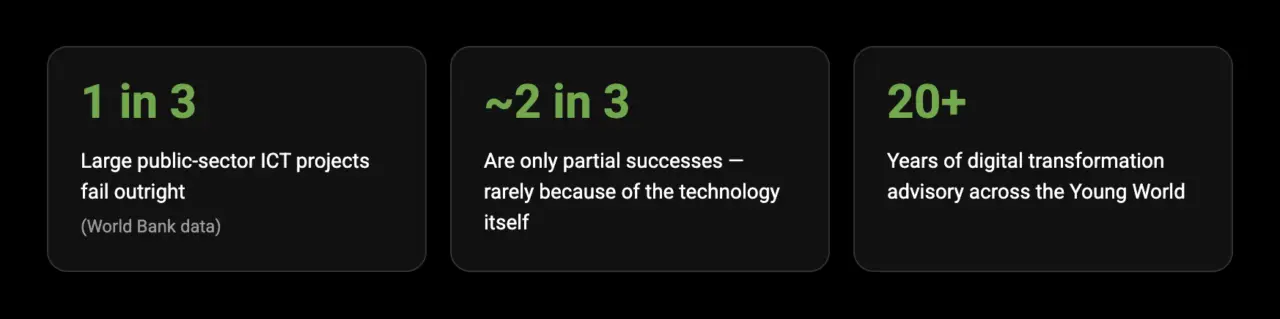
Across more than two decades of digital transformation advisory work, Genesis has diagnosed a consistent pattern. Both public and private organisations treat technology as a discrete work stream - a solution to be procured and deployed - rather than as one element of a complex, interdependent ecosystem.
Legal frameworks that don’t enable the solution. Financial models that collapse after the pilot. Beneficiaries who were excluded from the design process. Human capacity that was never built to sustain operations at scale. These are the real failure modes. The GOAT Framework was built to surface them before they become irreversible.
The success of technology-driven impact at scale is wholly dependent on factors beyond the technology stack itself. The GOAT Framework drives us to consider these.
THE FRAMEWORK
Four pillars, deeply interconnected
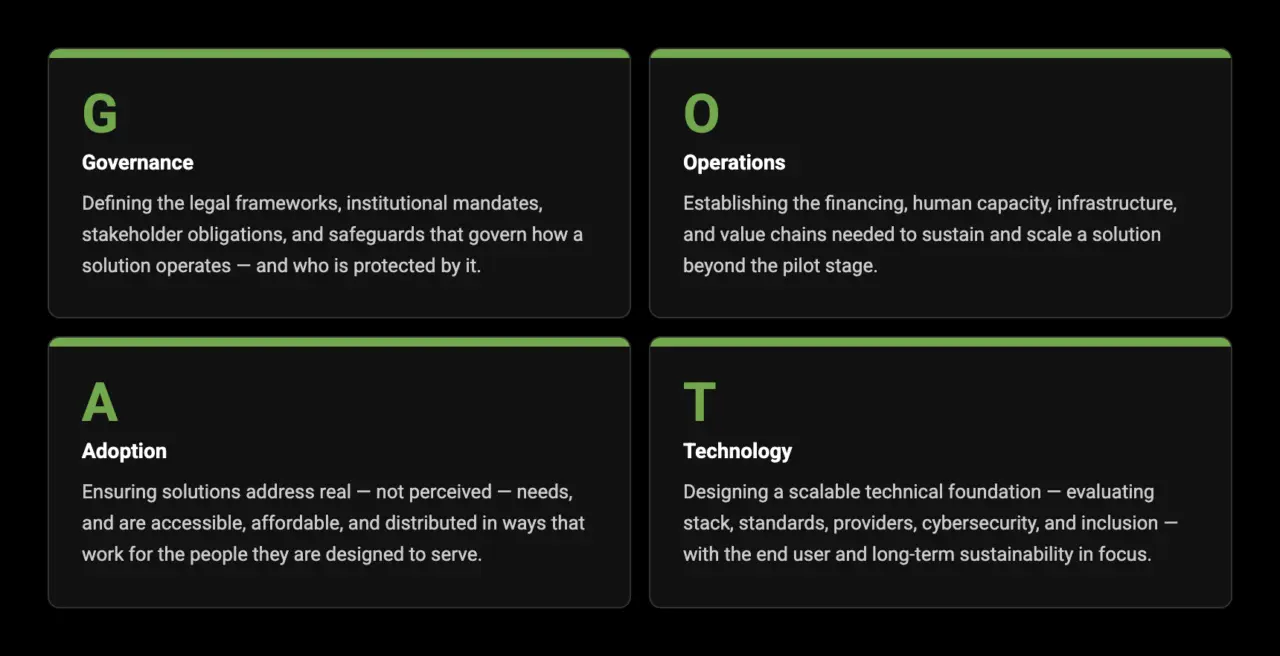
GOAT - Governance, Operations, Adoption, Technology - guides implementers through the full ecosystem of considerations that determine whether a technology-enabled impact solution scales or stalls. It does not prescribe a starting point. The right entry depends on context. What it demands is that all four pillars are actively managed across the full solution lifecycle.
HOW GOAT IS APPLIED
A closed, reinforcing loop - not a checklist
GOAT is not sequential. It is a closed, reinforcing loop through which impact and sustainability are achieved when all four pillars are actively managed. Decisions in one area become the blueprint - or the constraint - for the others. A governance mandate shapes technology architecture. An operational resource constraint defines which adoption strategies are realistic. Beneficiary feedback must reach back into the technical foundation.
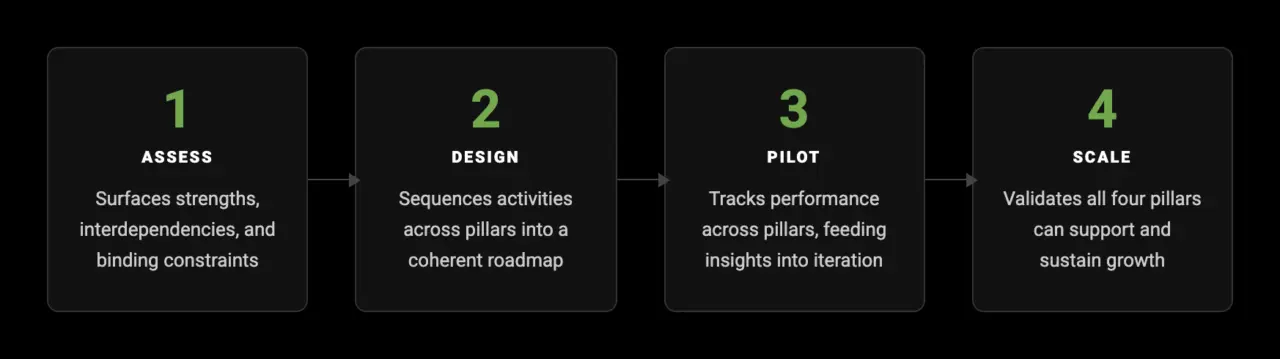
GOAT adapts its role across the solution lifecycle: