
• Youtube Icon
  • Twitter icon
  • Instagram icon
  • LinkedIn icon
  • Facebook icon
Logo
    • Who we are
      • Who we are
      • Where we work
      • Who we work with
      • How we work
      • Our people
      • Our values
      • Genesis in the community
      • Our history
    • What we do
      • Behavioural solutions
      • Climate Finance and Economics
        • Climate finance
        • Just transition
        • Resilience and adaptation
      • Competition and Regulatory Economics
        • Competition economics
        • Regulatory economics
        • Communication and broadcasting
        • Damages and other litigation
        • Energy
        • Trade
      • Economic opportunity
        • Agriculture and agribusiness
        • MSME development
        • Gender and development
        • Green economy
        • Youth
      • Financial Services Strategy
        • Financial sector strategy
        • Market analysis and positioning
        • Financial risk management
        • Financial market policy
        • Financial inclusion
        • Applied behavioural economics
        • Payments
        • Digital financial services
        • Strategic due diligence
        • Partnerships
      • Frontier Technologies
        • Digital opportunities and their enablers
        • Digital public infrastructure
        • Digital policy and regulation
        • The Goat Framework
      • Health
        • Reproductive, maternal, child health and nutrition
        • Infectious diseases and pandemic preparedness
        • Digital health and data transformation
        • Health financing and systems optimisation
      • Human Development
        • Education
        • Social protection, child protection and jobs
        • Social sectors financing
        • Public finance management
      • Monitoring, evaluation and learning
        • Programme and impact evaluation
        • Monitoring and results measurement
        • Integrated monitoring, evaluation and learning
      • Primary Data Intelligence (PDI)
      • Economic Growth and Impact
        • Corporate impact and ESG
        • Political and public policy advisory for corporates
        • Economic and regulatory impact assessments
        • Just transition
        • Digital livelihoods
      • Services
        • Genesis Global Business Services
    • Our purpose
    • Join our team
      • Join our team
      • Why I chose Genesis
      • Young professionals
      • Experienced hires
      • Sign up to be an independent consultant
      • Bursaries
      • Our internship programme
    • News and insights
      • News
      • Newsletters
      • Reports and other documents
    • Contact us
      • Business Development Unit
      • Corporate enquiries
      • Careers
      • Offices
  • Youtube icon
  • Twitter icon
  • Instagram icon
  • Linked In Icon
  • Facebook icon
image

Uganda’s long-term financing and resource mobilisation plan for community health workers

  • Focus Area:

    Health

  • Area of Expertise:

    Health financing and economics
    Costing
    Fiscal space analyses

  • Client:

    Living Goods Uganda and the Ministry of Health (Uganda)

  • Countries:

    Uganda

  • Date:

    2025

  • Project name:

    Long term sustainable financing and resource mobilisation plan for community health workers in Uganda

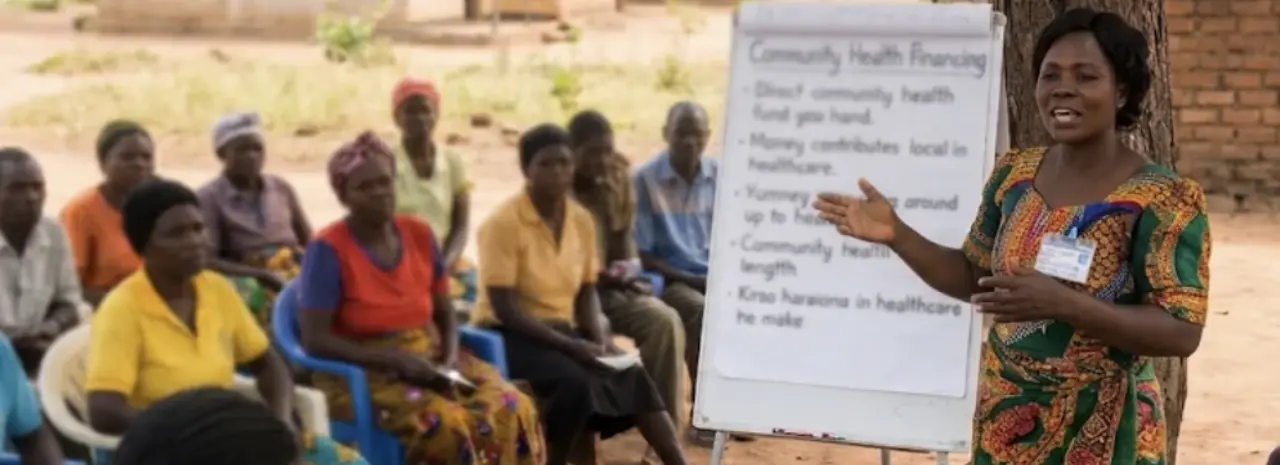
In 2025, Genesis Analytics provided technical assistance to Uganda's Ministry of Health (MoH) and Living Goods Uganda to support the scale-up, institutionalisation, and long-term financial sustainability of the national community health system.

At the core of the assignment was the development of phased implementation and scale-up scenarios designed to facilitate the progressive absorption of Community Health Workers (CHWs) - both Village Health Teams (VHTs) and Community Health Extension Workers (CHEWs) - into the Government of Uganda's budgetary allocations. Anchored on these implementation scenarios, the long-term financing and resource mobilisation plan mapped out Uganda's community health investment landscape through 2035. 

It established annual financing targets to match projected resource needs, defined an optimal public–donor financing mix over the 10-year horizon, and developed an accountability framework to track annual funding commitments against the plan.

The technical delivery was executed in two interconnected phases:

Phase 1: Costing and dynamic resource needs estimation

The team conducted a comprehensive financial costing of community health service delivery using an incremental, ingredients-based approach. Drawing on data from the Ministry of Health, the model captured inputs across core categories: workforce compensation and stipends, essential health commodities, field kits, eCHIS digital reporting tools, training, supervision, and programme support overheads. The team then developed a flexible, dynamic costing model that enabled policymakers to simulate different policy decisions, unit costs, and coverage targets across multiple implementation scenarios (Base, Moderate, and Full-Scale cases).

Phase 2: Funding gap quantification and fiscal space analysis

In the second phase, the team evaluated the macro-fiscal environment using a financial programming framework. The team quantified the net annual and cumulative funding gaps across the entire 10-year implementation period by comparing projected resource requirements against available and anticipated domestic and external revenues. To bridge this financing gap, the team assessed four strategic pillars for creating fiscal space:

  • Domestic Revenue Mobilisation (DRM): Broadening the tax base alongside innovative financing options, including earmarked sin taxes and social impact bonds;

  • Official Development Assistance (ODA): Aligning bilateral, multilateral, and global health donor trajectories against shifting development finance realities;

  • Deficit Financing and Borrowing: Evaluating sustainable sovereign borrowing thresholds; and

  • Efficiency Gains and Budget Reprioritisation: Identifying health sector allocative efficiencies and potential cross-sectoral budget realignments.

The resulting roadmap provided the government of Uganda and its partners with an actionable, evidence-based strategy to transition community health from donor reliance to predictable, domestic-led financing.

IMPACT UNLOCKED.

Subscribe now to our monthly newsletter.

© 2026. All rights reserved.

  • Youtube Icon
  • Twitter icon
  • Instagram icon
  • LinkedIn icon
  • Facebook icon
  • Privacy Policy
  • Email Disclaimer
  • Whistle-Blowing Form

Head Office:
50 6th Road, Hyde Park, Johannesburg, 2196

Switchboard:
+27 (0)11 9947 000

Facsimile:
086 688 2247

We value your privacy

We use cookies to enhance your browsing experience and analyse our traffic. Analytics cookies are on by default; you can switch them off here at any time. By clicking "Accept All", you also consent to marketing cookies.

View Cookie Policy
Subscribe now to our monthly newsletter.

IMPACT UNLOCKED.

Sharp analysis.
Lasting solutions.

Subscribe now to our monthly newsletter.