



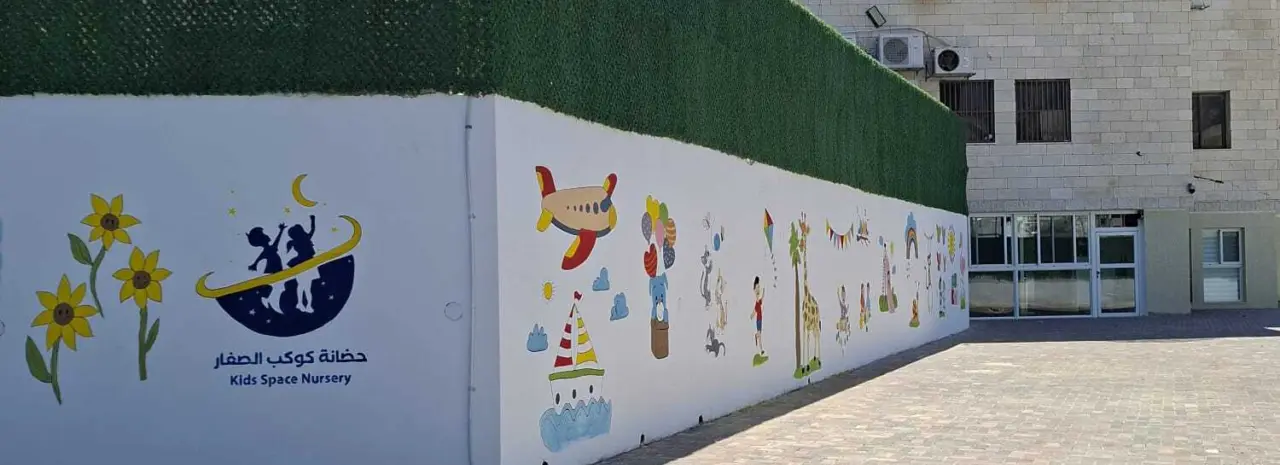
A new beginning for childcare in Nablus
20 October 2026
In 2023, the International Labour Organization (ILO) asked us to help explore a bold idea: could we design a replicable template for a women-led childcare cooperative in Palestine?
We started with the fundamentals. We mapped the legal and institutional landscape, spoke to families and nurseries across four cities, and assessed whether a cooperative model was even viable under Palestinian law.
The benefits were clear and threefold:
Female labour force participation in the West Bank is among the lowest in the world, and one of the biggest barriers isn't a lack of demand for women's work, it's the absence of affordable, trusted childcare. The cooperative would let mothers get jobs.
But it would also build a replicable training model to build a pipeline of childcare providers, train their staff with paid employment and provide certification. The cooperative would provide jobs in these communities.
Lastly, early childhood education and care has huge benefits on the children in the centres, both in terms of somewhere safe to play, to build social skills and to learn. The cooperative would help children to learn and develop.
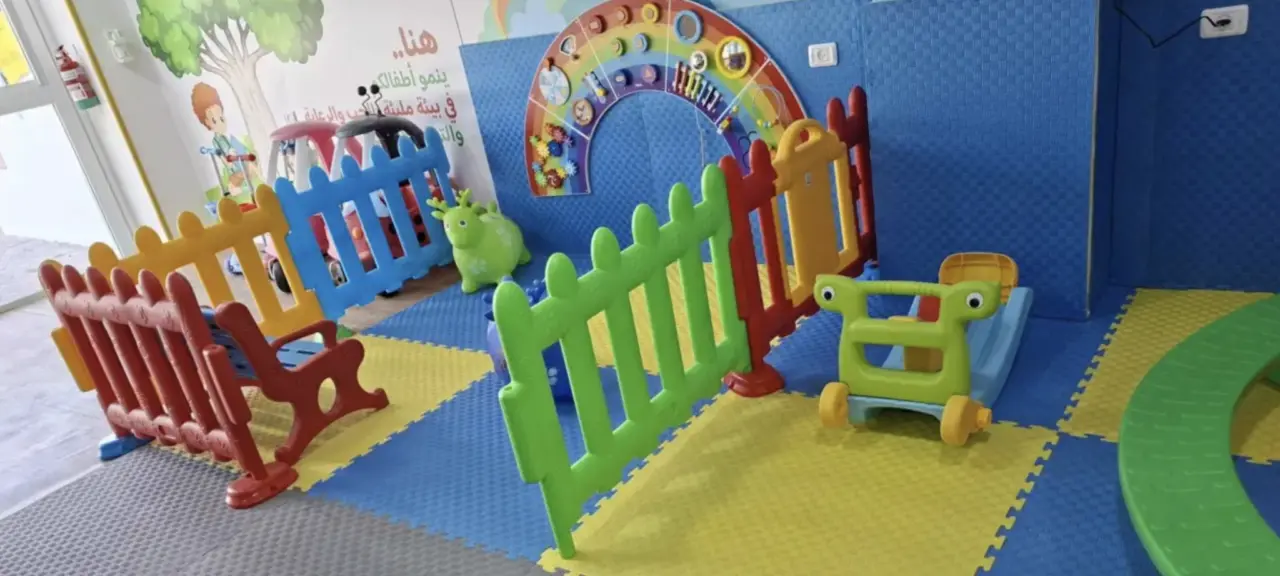
We started with the fundamentals. We mapped the legal and institutional landscape, spoke to families and nurseries across four cities, and assessed candidate locations against demand, existing service gaps and community readiness.
A cooperative model, as originally imagined, turned out not to be viable under Palestinian law. So we pivoted eventually recommending a non-profit company structure, one that offered greater flexibility and allowed donors to recover contributions. We identified Nablus as the ideal pilot site due to its lack of suitable centres, and identified a location on the ground floor of the General Federation of Palestinian Trade Unions building.
Training the women who would run the centre was about more than skills. It was about giving them a career they can build on, whether at this childcare centre or elsewhere. Seeing the first children arrive in Kids Space, Nablus is a moment our team is proud of. And it is the start of the work not the end of it as this model brings an example that can be replicated within lower income and remote rural communities.
Ali Shaar, Director, Palestinian Child Policy Center
We developed a full business plan and governance model, and partnered with the Palestine Child Institute (PCI), a local implementing partner with on-the-ground reach and community trust, to design and deliver training for the women who would run the centre. PCI trained 20 women in total, 10 highly experienced and ready for immediate recruitment, and 10 less experienced building their skills for the future.
The ILO’s work rests on the belief that decent work and social justice go hand in hand. This project therefore served a dual purpose: improving access to affordable and quality childcare for working parents, particularly women, while also creating decent employment opportunities for women in the childcare sector. Working with Genesis and PCI, we saw how a trade union-led childcare cooperative, developed in partnership with the Palestinian General Federation of Trade Unions (PGFTU) became a real place of work for women and a safe place for children.
Mohannad Shalabi, National Project Officer, ILO Ramallah
The centre took longer to get off the ground than anyone had hoped, and some of the women we trained found childcare jobs elsewhere in the meantime. But perseverance paid off. The Kids Space Nursery launched in early 2026 in Nablus and is now receiving its first children.
It is a small victory. But it is a real one.
The centre is now operational, and there are hopes to extend the model across Palestine in future. For more information, please contact: Bdu@genesis-analytics.com.