



Covid 19 data intelligence

We are living in an unprecedented time of uncertainty, but decisions made now will have a tremendous impact on the social and economic wellbeing of society as the COVID pandemic evolves. While it is important to understand the limitations of available information on the crisis, smart data products can help to make rapid decisions on the best available evidence. Genesis has developed two data intelligence tools related to the COVID crisis which help decision makers, and anyone else who is interested, to understand how the crisis is unfolding and where actions may be required.
Is Africa Flattening the Curve?

Is Africa Flattening the Curve provides an interactive dashboard reporting on the spread of the virus, its fatality rate, and the response in testing across all African countries that have 100 cumulative cases or more. Compare the rate of spread of the virus across multiple countries, including your own selection of international benchmarks, or dive deeper into the spread of the virus at a provincial level in South Africa.
Healthcare Risk Calculator

The Healthcare Risk Calculator provides a quick tool for estimating the strain on the healthcare system by forecasting the amount of ICU beds that will be required over the next two weeks. Input your own data to see how your district, region or country's healthcare risk profile will likely evolve over the next two weeks. This is a useful tool to support decisions about healthcare resources and lockdown levels.
News and insights
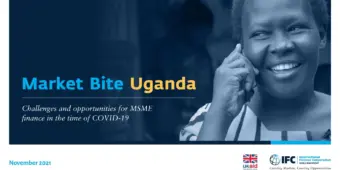
Ugandan MSMEs offer a $8.8b market opportunity
Uganda has a vibrant entrepreneurial business community with an estimated 1.1 million micro-, small-, and mediums-sized enterprises (MSMEs) across almost all sectors of the economy. To fully realise the potential of Uganda’s MSMEs, they require access to finance.
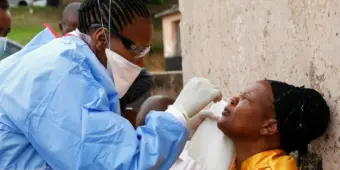
COVID-19 Special Public Health Surveillance Bulletin
This report details the preliminary results of a COVID-19 healthcare utilisation and seroprevalence survey (HUTS study) from three communities in South Africa, and shows an overall SARS-CoV-2 seroprevalence of 35.8% as of end January 2021. This suggests a substantial increase in seroprevalence during the second COVID-19 wave – most likely as a consequence of the greater transmissibility of the 501Y.V2 variant.

Excessive pricing in a crisis: Should competition authorities step in?
The recent civil unrest created unfortunate scenes of consumers queuing for basic foods. In such a crisis, our competition authorities are mindful that suppliers may be able to take advantage of vulnerable consumers by charging higher prices, despite the underlying costs not changing to the same extent.

Financial literacy builds resilience in times of crisis
The ASISA Foundation asked their long-term learning partner, Genesis Analytics, to investigate the financial resilience of past WageWise workshop participants who faced extreme financial shock in the early months of Covid-19 (July 2020). Here are some of our findings.

MSMEs can be key to sustainable recovery in a post-Covid Africa
MSMEs account for over 90% of businesses and create employment for about 60% of workers in Sub-Saharan Africa. MSMEs will also play an important role generating the 450 million new jobs required by 2035 to cater for the growing youth population of Africa. This year the United Nations focused on them as the “key to an inclusive and sustainable recovery” post the Covid pandemic on the annual Micro-, Small and Medium-sized Enterprises Day. Read more about the challenges:
FINANCIAL LITERACY TRAINING IS KEY FOR FINANCIAL RESILIENCE IN A CRISIS
Genesis, the MEL partner of the ASISA Foundation, assessed the extent to which financial education, in particular the financial education provided by their WageWise programme, builds resilience during economic downturns. The survey found that individuals who had received some form of financial education prior to the pandemic, fared much better compared to their counterparts. In particular, they had existing savings, less debt, and they were able to continue to provide for their families, even with reduced incomes due to the pandemic.
Measuring the prevalence of COVID in three SA areas
Genesis, in partnership with the NICD, PHRU and Epicentre, are excited to share the preliminary findings of the Healthcare UTilisation and Seroprevalence (HUTS) survey. The survey is currently running in the households of three South African communities (Maritzburg, Klerksdorp, and Mitchell's Plain). This report shows that 35.8% of survey participants had antibodies for COVID-19 as of 31 January 2021.
What can business expect in 2021? We look at ahead
The world remains in crisis and levels of trust in institutions are low. According to the global 2021 Edelman Trust Barometer people around the world now trust business more than government, the media or NGOs. Will business rise to that confidence in 2021?

Remote data collection in the time of COVID-19: Rwandan lessons
How can organisations collect meaningful and quality data virtually and understand the needs of program participants, in the midst of the COVID-19 pandemic? Read our work with The SEEP Network where we document learnings from recent virtual data collection in Rwanda, to counter limitations of the ongoing lockdowns and travel restrictions.
IMPACT UNLOCKED.
Subscribe now to our monthly newsletter.