



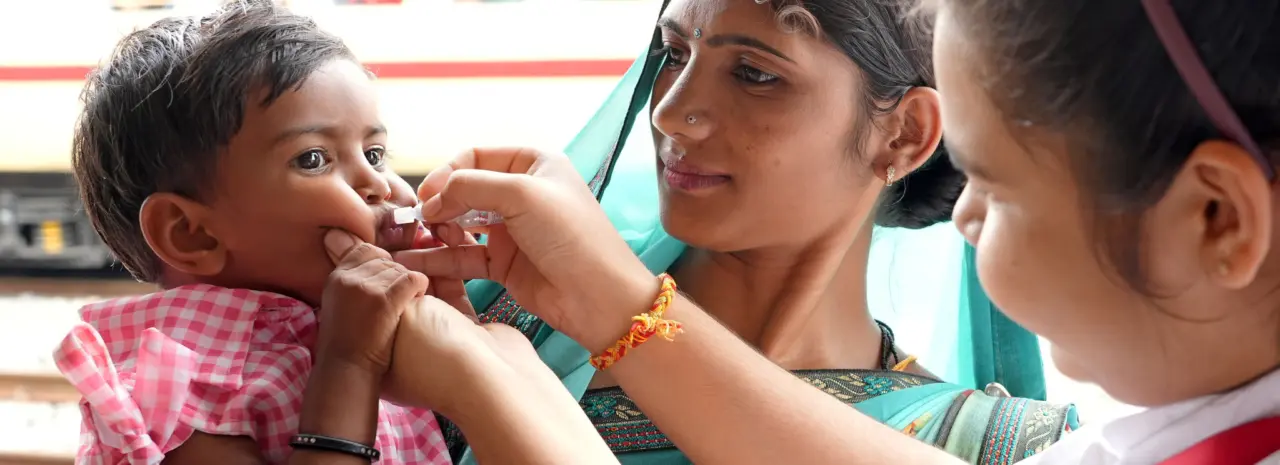
How gender barriers hamper immunisation in India
Addressing Gender Barriers in India's Immunisation Programme Gender-based inequalities substantially undermine the effectiveness of vaccination programmes in India.
Although immunisation prevents 3.5 to 5 million deaths annually, low immunisation rates persist, strongly linked to restrictive gender norms impacting both the delivery (supply-side) and the acceptance (demand-side) of vaccines. We partnered with UNICEF India to investigate how gender differences in the states of Maharashtra and Bihar were obstructing vital immunisation uptake.
Our approach involved a detailed examination of the complex, socio-behavioural factors that shaped the decision-making framework around seeking immunisation. Working with our consortium partner, Final Mile, we employed a human-centred design lens to thoroughly understand and iteratively test solutions to these gender-specific barriers.
We explored the specific challenges faced by women in their unique contexts, conducting immersive qualitative research with women, households, and communities. The research comprised innovative data collection methods, including simulated life scenarios and "hot state" discussions, to capture authentic behaviours and decision points.
The detailed findings from this research were used to co-create interventions that directly addressed the identified challenges and barriers. We prototype-tested these interventions rigorously with the parents and grandparents to ensure their practicality and effectiveness.
These validated solutions are now forming part of a national toolkit designed to increase immunisation uptake across India. The impact of this work is the development of a tested, evidence-based strategy that offers a path towards overcoming gender-related obstacles, making immunisation programmes more equitable and effective, and ultimately contributing to saving more lives.