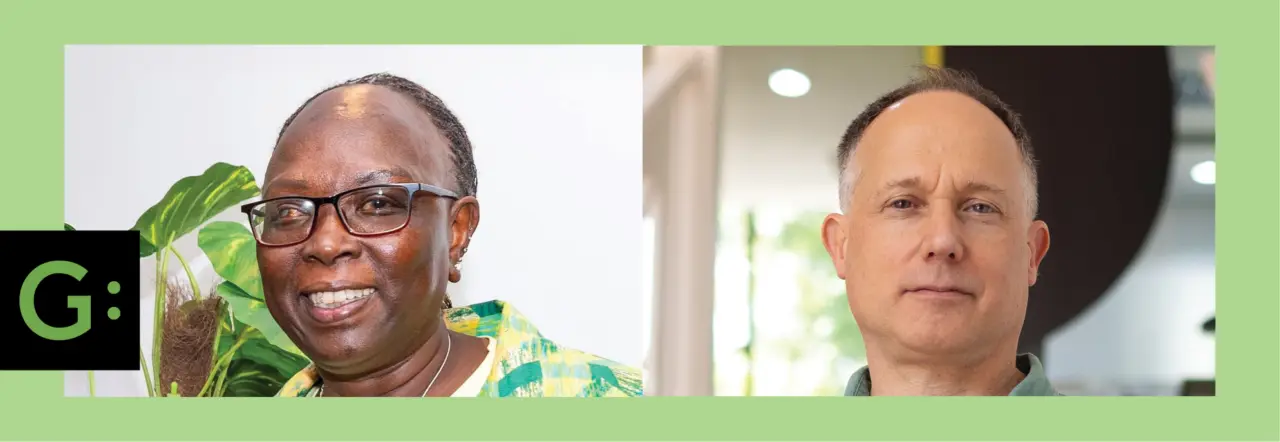
Betty Maina & Stephan Malherbe | The future is four billion Kenyans
28 October 2025
Here’s a new way to look at the world. Instead of categorising East and West, democracy and autocracy, developed and developing, think of young and old.
Ageing societies in Europe and North Asia face "population collapse" due to shrinking populations, fiscal strain, and pessimistic politics. Countries like Canada, China, and Japan have fertility rates a third below replacement levels.
Far less attention has been paid to the other half of humanity: those living in young societies with growing populations and workforces. These ‘Young World’ nations, home to four billion people, form a vibrant arc across Africa, the Middle East, and South and Southeast Asia.
The median age in the Young World is just 22, about half that of the ageing world. As you read this, three out of every four babies globally are born here. In Africa alone, seven babies are born for every one in Europe. When we say the future lies in the Young World, it’s literally true.
And that is precisely where our future growth will be forged. The Young World possesses immense, untapped potential for productivity gains.
Between now and 2050, the Young World's workforce will grow by 1.2 billion, while the ageing world's will shrink by 325 million. This growth in the Young World will drive the construction of most new global infrastructure, energy systems, and mining operations.
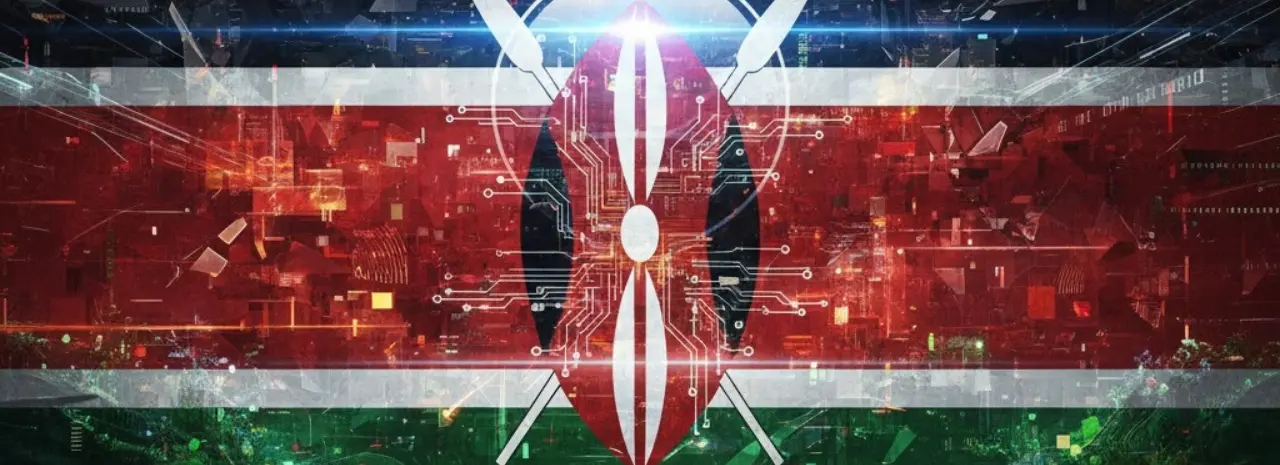
If you want to understand the present and future of the Young World, look no further than Kenya. With half of its population under the age of twenty, Kenya stands geographically at the very heart of this great, youthful constellation of nations spanning the Indian Ocean.
But there’s more to it than just that
More than even India or Nigeria, Kenya embodies the essence of the Young World. It possesses an educated, assertive youth, an unstoppable entrepreneurial drive and a profound tech-savviness. Above all, Kenya is defined by a rugged optimism, flecked through with streetwise realism.
Kenya, dubbed the 'Silicon Savannah,' boasts a thriving tech entrepreneurial class, exemplifying the modern Global African, with innovators receiving global accolades. However, some view the "Mulot Boys" less favorably.
Substantial investment flows into software and global business services, an industry Genesis and others champion. Finance, technology's vital partner, has seen remarkable progress. This success fuels confidence, as Kenya's soft power is now globally showcased through its achievements. There's significant opportunity to expand on this success.
Yet, the true emblem of Kenya is not just M-Pesa and tech pioneers. It is also found in the vast informal settlements of Nairobi, now home to six out of ten residents in the capital. It thrives in the heaving, energetic Jua Kali sector, the creator of eight out of every ten new jobs outside of agriculture.
These realities are also emblematic of a broader informalisation sweeping the entire Young World. This is not a choice, but a consequence. It’s what happens when governments and the formal structures of a nation fail to keep pace with the needs, aspirations, and sheer vitality of their people.
What one makes of this irrepressible, often ungoverned, world depends on your perspective. To us, it captures an extraordinary energy, a profound resilience and raw initiative. But it also represents a systemic failure to extend the benefits of a modern economy and society to what will soon be a majority of Kenyans.
Extend this view, and you see the same challenge for the majority of the young people who give the 'Young World' its name. A telling statistic lays this bare: despite Kenya's celebrated GDP growth, poverty levels have increased in recent years.
The tragic yet magical truth is this: with the right knowledge, capital, and opportunities, the young men and women labouring in the sweltering Jua Kali could double or triple their productivity. They could do the same to their incomes, fundamentally altering the trajectory of their families for generations.
In Kenya and across the Young World, the informal sector stands as a monument to the formal world's failure. One could call it a market failure, or a governance failure, but the truth runs deeper. It is a failure of leadership and a failure of imagination. For this, we are all in the dock.
So, what can the rest of the Young World teach Kenya about this pivotal moment?
A five per cent growth rate is simply too slow. Given Kenya’s population growth of over two per cent, this leaves a mere three per cent increase in prosperity per year - only a fraction of which will ever reach the vast, informal economy where most Kenyans live and work. For millions, tangible progress could be a decade away or more. If economic growth is to truly change the lives of ordinary Kenyans, and not merely the consumption of its elite, our ambition must be bolder. On the African stage, Kenya is a star. But measured against the dynamos of Asia, with whom we have all the assets to compete, we remain a laggard.
Link young people to global demand. The Jua Kali economy is a life-saver. But it is also a confirmation that domestic demand for services will not catch up with growth in the workforce - it can accommodate many, but only at low incomes. Instead, as has been the case for every fast-growing economy since World War 2, the driver of jobs for young people has to be vastly larger global demand. Kenya’s vaunted tech sector only really matters if it can deliver that. And that means exports of technology and related services to foreign markets. Global business services have the scale, and Kenya should have the capability. Outside of that, agriculture, tourism and some manufacturing can assist.
A different type of governing. Economist Stefan Dercon pointed out that countries that have grown have all shared one attribute: an elite committed first and foremost to growing the economy. He called this a development bargain. Given Kenya’s profound human capital, its uneven growth, and the chasm between the formal and informal economies, only one conclusion is reasonable: Kenya’s elite must reconfigure its pact. This is not a naive farewell to realpolitik. It is a recognition that the old way of doing things is not working for most Kenyans.
In a world in flux, a new agility is demanded. Kenya, like all Young World nations, navigates a landscape of contradictory forces. Protectionism and geopolitical tension threaten the established pathways to growth we have relied upon. Yet, new energy systems and demand for critical minerals present fresh opportunities. The most profound shifts, from artificial intelligence to evolving global alliances, present both immense risk and unprecedented progress. There are no simple answers. But what is clear is that a new agility is required, built on a clear understanding of national self-interest and real skills in the international business of building alliances and managing uncertainties.
Like the Young World as a whole, Kenya stands on the threshold of a new era - a Kenyan century. Its inherent strengths of hard work, initiative, and a deep respect for knowledge position it to reap immense dividends.
But reinvention is also required.
And this transformation begins at home, with a fundamental renewal of both its elite and social compacts. Kenya's moment has arrived. And because its story is the story of the Young World, we are all Kenyans now.
Betty Maina is the East Africa director at Genesis Analytics and is based in Kenya. Stephan Malherbe founded the firm, an African-owned impact partner headquartered in Johannesburg. For us at Genesis, the Young World is not just a market; it is our home. Our mission is to help societies, governments, and companies deliver impact at scale while championing leadership from within.