



Sthandiwe Msomi & Tushara Ravindranath | The digital key to unlocking South Africa's grants
4 December 2025
South Africa’s labour market is trapped in a deep and lasting crisis. More than 11 million people are either without work or have given up the search entirely. Each year, only a small fraction - a mere 8.7% - manage to find employment. Meanwhile, the informal sector, a common source of livelihood in other middle-income nations, sustains just 16% of South African adults, a stark contrast to the nearly 45% seen elsewhere. Against this backdrop, over 28 million people depend on social grants, and more than half the population lives in poverty.
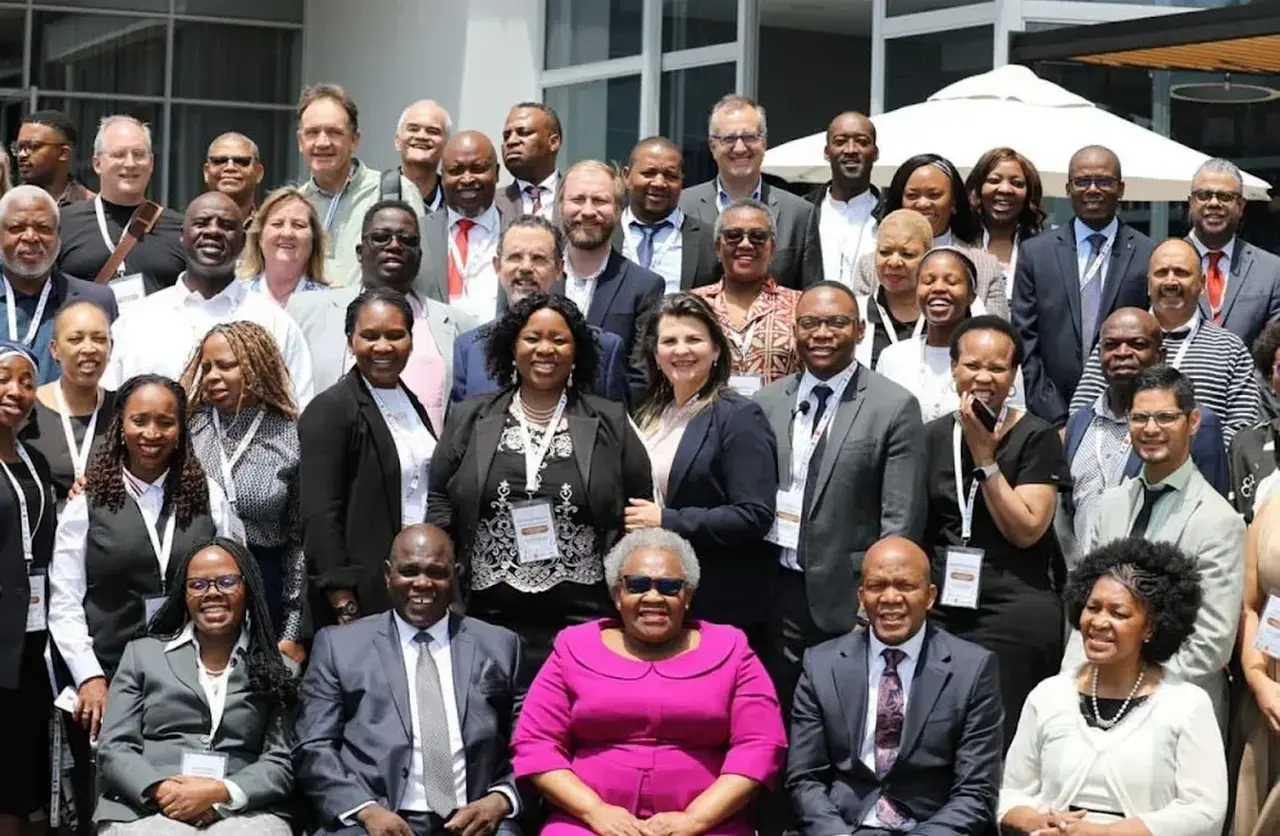
It was this reality that set the stage for a two-day gathering in Johannesburg, South Africa, titled From Grants to Growth. Conceived in partnership with the Department of Social Development, SASSA, the Presidency, the Centre for Social Development in Africa and Genesis Analytics, the event was steered by Genesis consultants Kathy Nicolaou-Manias (lead curator) and Dr Fidelis Hove (programme director). Together, they drew senior officials and partners from across the public sector and beyond - including the National Treasury, the National Development Agency, the Gates Foundation, the University of Johannesburg, and FinMark Trust - into one room, united by a single, pressing challenge.
The drive is there, but not the pathway
The first critical learning was that those who receive grants are not passive. Time and again, people use this support as a springboard for striving towards a better life. Leading researchers presented evidence showing that this income is routinely invested in the search for work, in tiny business ventures, in education and in simply keeping a household afloat.
The problem lies not in a lack of will, but in a lack of way.
People are trying, but they are navigating a landscape without clear pathways or a supportive framework to scaffold their efforts.
As Social Development Minister Nokuzola Tolashe reminded everyone, these grants provide an anchor of dignity and resilience. Yet the system itself must now evolve. “Grants must remain the foundation, but they cannot be the destination.
The focus must be on building capability. The way forward lies in voluntary “cash-plus” models, which build on the foundation of unconditional grants, like the Social Relief of Distress (cSRD) and actively connect people to the services that can help them get ahead.
Evidence from around the world shows that when people receive cash support, they naturally use it to search for jobs or start small businesses. The task, then, is not to change people’s behaviour- that drive is already there. The real work is to change the system; to reshape South Africa’s social protection landscape.
A digital backbone for personalised support
This digital shift goes well beyond a routine technology upgrade; it is designed to establish the backbone of a smarter, more responsive support system. By integrating existing data and systems across departments, the newly launched national data exchange platform (MzansiXchange) will soon enable government to understand each individual’s circumstances and their proximity to the labour market.
This will allow the state to segment people effectively and direct them to the right level and type of support—whether intensive guidance, moderate assistance, or light-touch help.
Personalised referrals and services will ultimately be delivered through the citizen-facing MyMzansi app, currently in prototype, which will be accessible online, in person, or with assistance from a community worker.
This approach would also cut through bureaucratic duplication, fostering a new coherence across different government departments. For the first time, it would make possible a genuine “cash plus” model, connecting a cash transfer recipient with practical tools like coaching, training, or help finding work.
The path forward
The way forward is to make grants stronger, connect recipients to real-world services, and simplify a system that too often feels like a maze. By using smart technology, the support each person receives can be tailored to their specific situation.
In a country where so many struggle to find work, this safety net must do two things: it must protect people's dignity, and it must offer them a genuine chance to improve their lives.
The challenge is to construct that bridge, turning a grant into a genuine gateway.