




Ed Dyson | Right now, Central Asia faces a choice that will define its future for a generation
12 December 2025
A new report, launched last month in Almaty, Kazakhstan, lays out these high stakes: invest properly in the region's massive youth population or miss a historic opportunity for prosperity.
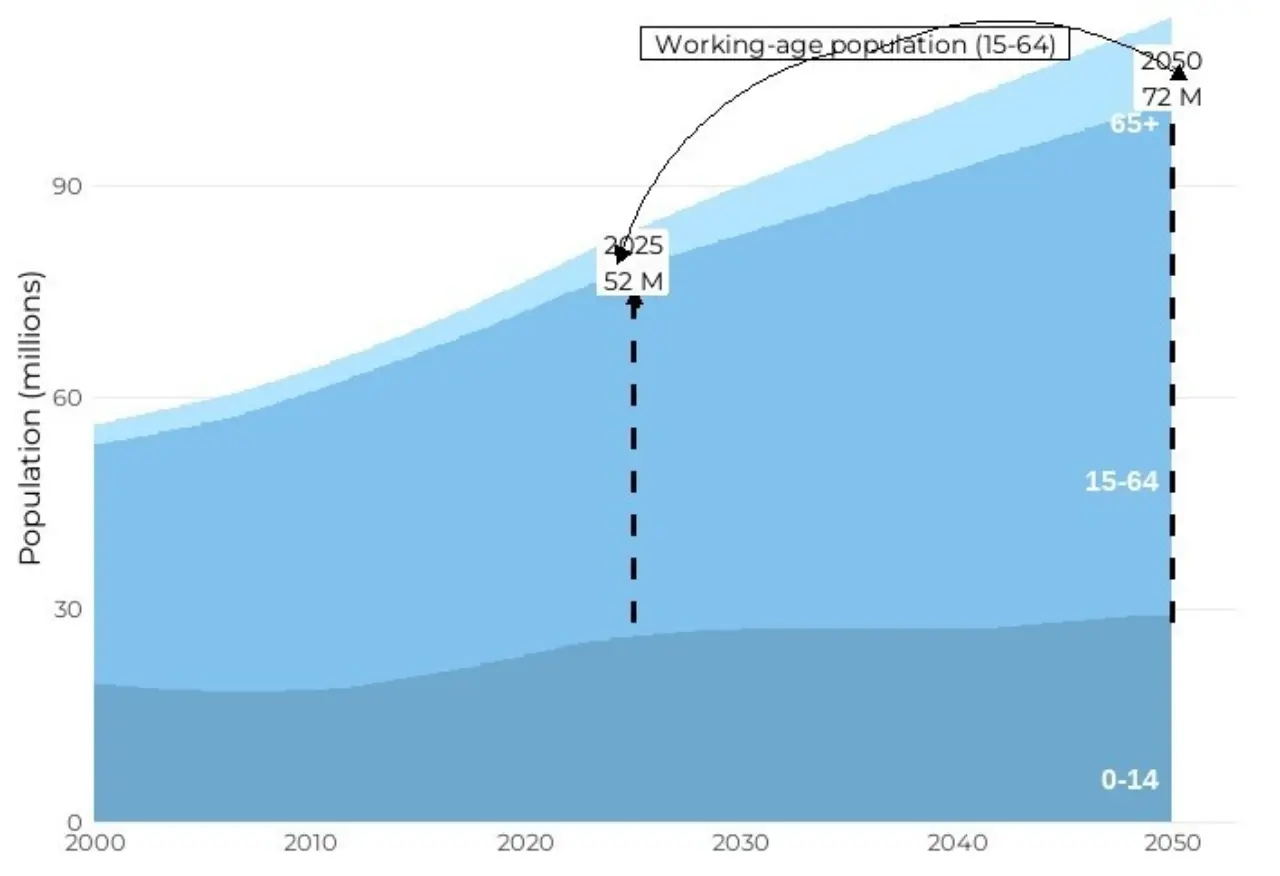
The 'Generation 2050: Investing in Tomorrow, Today' report, produced by Genesis Analytics in partnership with UNICEF, points to a unique and closing window. While Central Asia's population is growing and young, it is ageing faster than almost anywhere.
The next 25 years are crucial.
If governments invest now in the health, education, and jobs for this young generation, they can fuel decades of economic growth and stability. If they don't, that potential will be lost as the population grows older and the moment passes.
Figure 1: Total population by broad age groups, Central Asia Region, 2000 - 2050 (data from UN Population)
The compelling economic case for acting now
This potential boom won't happen by itself. Our analysis shows it must be earned through smart, sustained investment in young people: their health, well-being, and skills.
The economic modelling in the report makes a powerful argument:
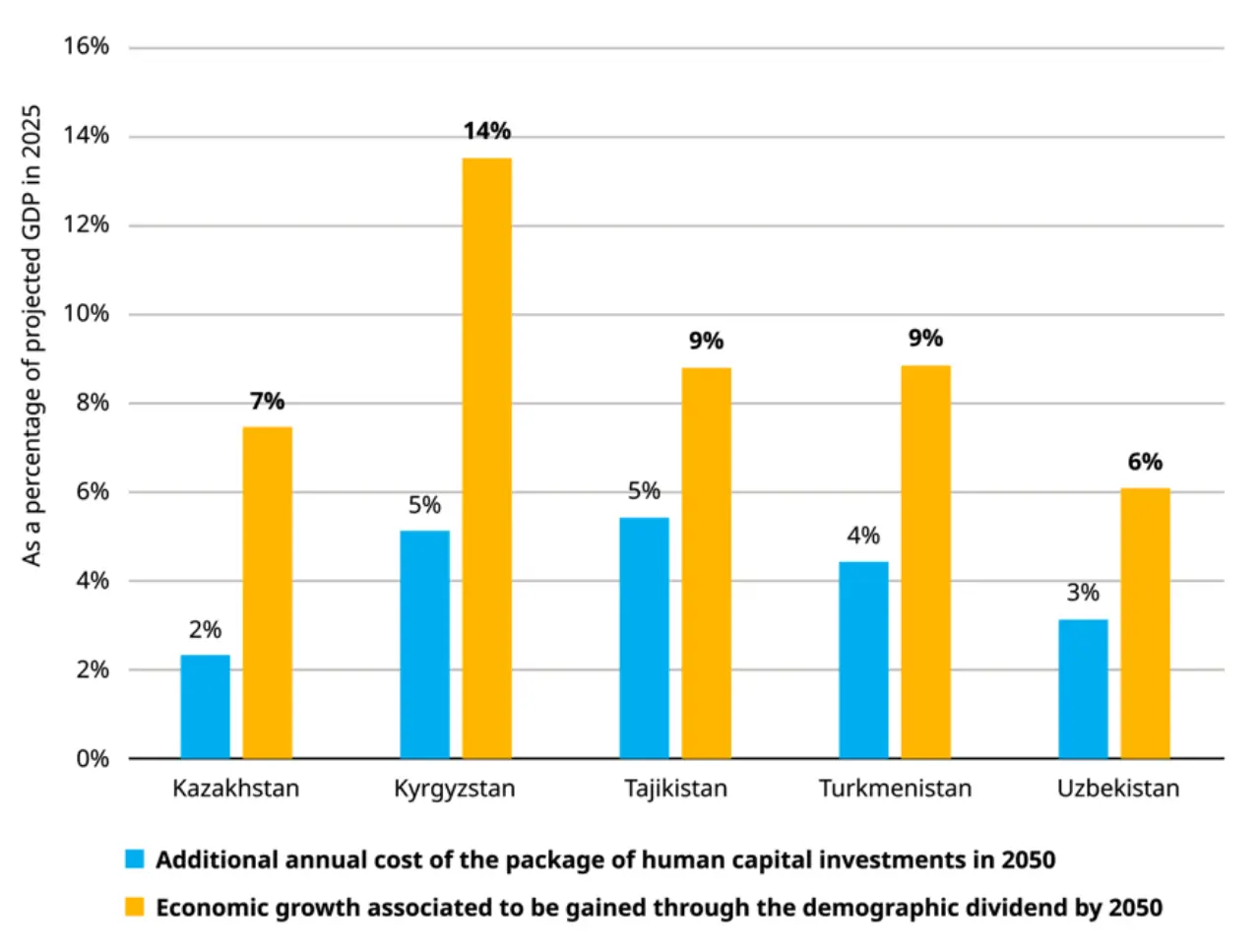
The reward is substantial. By unlocking this demographic dividend, the region could see its GDP per capita grow by an extra 6% to 14% by 2050.
The cost is manageable. Achieving this would require an estimated investment of between 2% and 5% of GDP by 2050.
The return is high-impact. For every dollar invested, the economic returns are projected to range from 1.6 to 3.2 times the cost.
It is, quite simply, one of the most effective investments a government can make.
A clear plan to turn potential into progress
To realise these massive gains, the report proposes a focused investment plan. The goal is simple: ensure every child not only survives but thrives, and is ready to join the future workforce.
The key recommendations form a practical portfolio for action:
Education: Move beyond just getting children into school. The priority must be quality learning, ensuring every child is genuinely ready for work and life.
Social protection: Create a guaranteed financial floor for all children to tackle poverty at its roots.
Child protection: Properly equip social service workers to prevent violence and keep children safe.
Health & nutrition: Eliminate malnutrition and achieve universal health coverage. A healthy child is a child who can learn and reach their full potential.
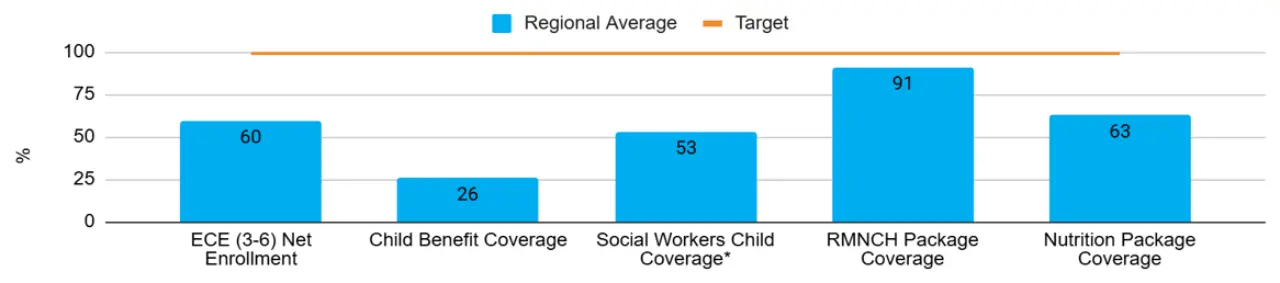
While each country starts from a different point, all must scale up these critical areas. Here are five concrete examples of what this looks like in practice.
Figure 2: Coverage of key human capital interventions, regional averages vs proposed targets
This is what we know.
The appetite for reform is real. While each country must lead its own transformation, true regional collaboration can multiply the impact.
At Genesis, our mission is to turn evidence into lasting, large-scale change. Partnering with UNICEF on this report is an example of that work. Generation 2050 is not just a study, it is our roadmap for real action.
We know that the region's prosperity will be built by its people, but only if we invest in them today.